


You might already know you need help. But the thought of stepping away from your kids or taking weeks off work feels impossible. It’s not just a scheduling issue—it’s an emotional one.
You care deeply about the people who depend on you, and the idea of being “gone” for treatment can feel like you’re abandoning them. You may picture missed school pickups, unanswered emails, bills piling up, and the quiet loneliness your absence might leave behind.
Here’s the truth: wanting help doesn’t make you selfish—it makes you brave. And you are not the first person to feel trapped between urgent personal responsibilities and urgent personal healing. At Ascend Near Albuquerque, NM, we see this every day. We’ve worked with parents, caregivers, and professionals who couldn’t imagine leaving, yet found a way to step into care without losing what mattered most.
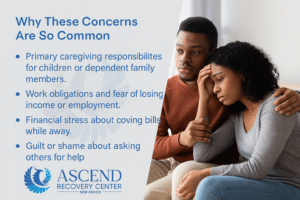
Why These Concerns Are So Common
When you think about leaving for treatment, you might feel two opposing forces inside you. One says, “I need to do this for myself.” The other says, “If I go, everything will fall apart.”
Common reasons people hesitate to enter a residential treatment program include:
- Primary caregiving responsibilities for children or dependent family members.
- Work obligations and fear of losing income or employment.
- Financial stress about covering bills while away.
- Guilt or shame about asking others for help.
- Worry about judgment from coworkers, family, or friends.
These feelings are valid. Pretending they don’t exist only makes the decision harder. The real path forward is acknowledging them—and then finding solutions that protect both your recovery and your responsibilities.
How Residential Treatment Programs Can Adapt
Not every residential treatment program is rigid in its structure. Many offer pathways that can make the decision more realistic for people who can’t commit to a long-term absence.
Some possible options include:
- Short-term intensive stays (10–14 days) focused on stabilization and crisis intervention.
- Step-down programs where you begin in residential care and transition into partial hospitalization or outpatient services.
- Flexible entry dates so you can coordinate with family schedules or work cycles.
- Regional program access so you can remain closer to home for easier family visits—such as our Residential treatment program in Las Cruces, Near Albuquerque, NM if Albuquerque is too far.
These options aren’t about “watering down” treatment—they’re about making it possible for you to start.
Preparing for Time Away
Taking time away from work or family isn’t easy, but with preparation, it’s possible to create enough stability to allow you to focus on healing.
Here are some starting points:
For Work
- Research whether your employer offers medical leave for mental health or substance use treatment.
- Ask about coverage under the Family and Medical Leave Act (FMLA), which can protect your job for up to 12 weeks in certain situations.
- Consider talking with HR or a trusted supervisor—many are more supportive than people expect.
For Children
- Make a short-term caregiving plan with family members, close friends, or a trusted babysitter.
- Create a daily routine chart for kids so they feel stable while you’re away.
- Schedule regular check-ins (calls or video chats) during treatment to stay connected.
For the Household
- Automate bill payments if possible.
- Stock up on essentials before you leave.
- Assign key responsibilities to friends or neighbors willing to help.
Remember, your goal isn’t to make life “perfect” before you go—it’s to set up enough support so your absence doesn’t cause chaos.
The Cost of Waiting
It’s natural to want to postpone treatment until “the timing is better.” But here’s what often happens:
- Work performance declines due to stress, exhaustion, or worsening symptoms.
- Family relationships become strained under the weight of unaddressed challenges.
- Mental health symptoms or substance use escalate, making recovery more urgent and complex.
Delaying treatment can actually create bigger disruptions later. Think of it like repairing a leaking roof—if you wait until the damage is severe, the repair becomes harder, more expensive, and more disruptive. Seeking help now is an investment in protecting the life you’ve worked so hard to maintain.
Keeping Your Family Connected During Treatment
One of the most reassuring parts of many residential programs is how they maintain connection between you and your loved ones while you’re in care.
At Ascend Near Albuquerque, NM, that might include:
- Scheduled calls or video sessions with family.
- Letter writing to maintain personal connection and support.
- Family therapy sessions so your loved ones can learn about your recovery process and build healthier patterns alongside you.
For children, these points of contact are especially important. They help kids see that you are safe, that you love them, and that getting help is something strong people do.
Understanding That It’s Not Selfish to Step Away
It can feel like choosing treatment means putting yourself before your family—but that’s not the whole picture. The healthier you are, the more present and stable you can be for the people who rely on you.
Choosing to get help is an act of care for your loved ones. You’re protecting them from the long-term impact of untreated mental health or substance use issues. You’re modeling resilience and the importance of asking for help when it’s needed.
Your Next Steps Don’t Have to Be Perfect
You don’t need to know exactly how this will work before you take the first step. The admissions team at a program like Ascend Near Albuquerque, NM’s residential treatment program can help you map out a plan that fits your life.
Sometimes the conversation starts with, “I want help, but I don’t know how to make it work.” That’s okay. You’re not expected to have all the answers right now—just a willingness to explore them.
Hope and Help Are Closer Than You Think
If you’ve been telling yourself, “I can’t leave right now,” take a moment to imagine what life could look like if you did. Less stress. More presence with your kids. More stability at work.
It’s not about stepping away forever—it’s about stepping into the care you need so you can return stronger.
Ascend Near Albuquerque, NM’s residential treatment program in Albuquerque is here to meet you where you are, with options that respect both your healing and your responsibilities.
Call (888)533-9334 to learn more about our Residential treatment program services in Albuquerque, Near Albuquerque, NM.
FAQs About Entering a Residential Treatment Program When You Have Work or Family Responsibilities
Q: Can I attend a residential treatment program for a shorter time than 30 days?
Yes. While 30 days is common, some programs offer shorter stays designed to give you a strong start, followed by outpatient care.
Q: How can I keep my job if I leave for treatment?
Many people qualify for job protection under FMLA or state-specific leave laws. Your treatment center can provide documentation to support your leave request.
Q: Who will take care of my kids while I’m in treatment?
Family members, trusted friends, or professional caregivers can step in temporarily. Many parents find their network more willing to help than they expected once they explain the situation.
Q: What if I can’t travel far for treatment?
Looking for a program closer to home—like our Residential treatment program in Las Cruces, Near Albuquerque, NM—can make it easier for family to visit and for you to transition home afterward.
Q: How will my kids handle me being away?
Kids often adapt better than we expect when they know where you are, why you’re there, and that you love them. Family therapy and regular communication during treatment can help ease the transition.
