


I used to love the holidays. Then I got sober. And suddenly, every string of lights felt like a tripwire.
It’s been over five years since my last use. I’ve rebuilt my life. On paper, I’m doing great—steady job, decent relationships, still active in a recovery community. But around December, something shifts. I find myself feeling more tired than grateful, more disconnected than festive. And I hate admitting it because I “should be fine by now,” right?
This past season, I almost ghosted my own recovery. Not by using—but by checking out emotionally. I wasn’t in crisis, but I wasn’t okay either.
So I made a move I didn’t think I’d ever need again: I went back to detox.
Not because I had relapsed—but because I was stuck. Quietly, deeply, spiritually stuck. And as strange as it sounds, returning to a drug detox program gave me something I didn’t even know I was looking for: space to reconnect.
I Thought Detox Was for People in Crisis. I Was Wrong.
I had this belief—maybe you do too—that detox is only for people just starting out. People in withdrawal. People actively using. And if you’re years into recovery, going back feels like admitting you’ve failed.
But here’s what I’ve learned: detox can be more than medical. It can be a reset. A place to pause. A way to stop everything spinning long enough to feel again.
I wasn’t crashing. I wasn’t drinking. I was just numb. And that kind of spiritual flatness? It’s quiet, but it’s dangerous. Because when you’ve been sober a while, you stop giving yourself permission to ask for help.
The Holidays Triggered Me in Ways I Didn’t Expect
I didn’t realize how much the holidays still stirred up until I caught myself skipping meetings, ignoring texts, and avoiding every invitation that might require me to “show up.” Emotionally, I felt like I was treading water—smiling when I had to, retreating when I didn’t.
It wasn’t about wanting to use. It was about not wanting to feel empty.
My old patterns didn’t shout—they whispered. Stay up late. Overwork. Scroll. Cancel plans. Say “I’m good” when I wasn’t.
I wasn’t in relapse. But I wasn’t connected. And somewhere deep down, I knew I couldn’t keep skating on the surface of my own life.
Checking into Detox as an Alumni Was Quiet, Not Dramatic
I didn’t make a big announcement. I called Ascend, I asked if there was space, and I checked in.
There were no dramatics. No shame. No “what happened?” eyes from the staff. Just calm welcome, real talk, and space to breathe.
The drug detox program in Albuquerque wasn’t what I remembered from years ago. Maybe I’d changed. Maybe the staff had, too. But it didn’t feel like a place for broken people. It felt like a place for people who wanted to feel whole again.
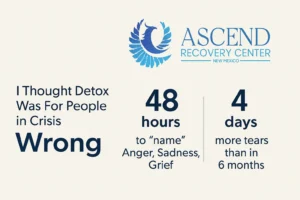
I spent four days there. Not because I needed to detox from a substance—but because I needed to detox from disconnection.
What That Short Stay Actually Did for Me
Within 48 hours, I stopped white-knuckling through my feelings and started naming them.
Anger. Sadness. Old grief. Deep loneliness I’d buried under “I’m fine.”
I journaled. I slept. I talked to a counselor who didn’t give me a single line about gratitude or “focusing on the positive.” She said, “You’re not failing. You’re in a winter. Let’s sit in it together.”
I cried more in four days than I had in six months.
Leaving that week, I didn’t feel “cured.” But I felt reconnected. Not just to my recovery, but to myself.
Detox Helped Me Stop Skating Through My Own Life
There’s a lie that floats around in long-term sobriety: that you should feel better all the time. That if you don’t, something’s wrong with you.
But the truth is, recovery isn’t a straight line—and being sober doesn’t protect you from emotional flatness, seasonal depression, or good old-fashioned burnout.
That short stay in detox reminded me that asking for help doesn’t mean I’m slipping. It means I’m serious about staying here.
I’m not pushing through the holidays this year. I’m showing up for them—uneven, imperfect, but present.
You’re Not Weak for Feeling Worn Out in Recovery
If you’re years into sobriety and still feel waves of sadness, or like you’re just going through the motions—you’re not doing it wrong.
You’re human. And if your body, your heart, or your spirit is asking for rest, it’s not a failure to listen.
Whether you’re in Albuquerque, or looking quietly for a drug detox program in Rio Rancho, or need privacy in Loving,TX Ascend offers the kind of support that honors your progress—without asking you to pretend you’re okay.
This Season, Let the Reset Come Before the Breakdown
You don’t need to explain your way into asking for help. You don’t need to wait until you’re using again to admit something’s off.
If the holidays stir up old ghosts…
If you’ve stopped feeling much of anything…
If the only thing holding you together is momentum…
Pause.
It doesn’t have to be forever. It just has to be honest.
Call (888) 792-5442 or visit Ascend’s drug detox program services in Albuquerque, New Mexico to check in with people who understand that “doing well” sometimes means asking for help—again.
FAQ: Detox and Emotional Reconnection for Alumni
Do I need to be using again to go back to detox?
No. Many long-term alumni return for a short stay not because they’ve relapsed, but because they feel emotionally disconnected, worn out, or numb. Detox isn’t just about substances—it’s about resetting in a safe, supported way.
How long does an alumni detox stay usually last?
Every person is different, but most alumni who come back for emotional support or stabilization stay 3–5 days. It’s not a commitment to a full program—it’s a structured pause.
Will people assume I’ve relapsed?
Only if you tell them. Detox at Ascend is private, professional, and stigma-free. We treat your reasons with respect, not judgment.
Is this common?
More common than you’d think. Plenty of high-functioning, long-term sober individuals experience seasonal emotional dips—especially during holidays or anniversaries. Choosing to get support early is a sign of maturity in recovery.
What if I’m not sure if I need detox or therapy?
That’s okay. Reach out and have a conversation. The team at Ascend can help you figure out whether a detox reset, therapy, or another support path fits best for where you are right now.
