


I walked out of my first drug detox program convinced I had wasted everyone’s time. My body was clean, but my mind was a war zone. I still couldn’t sleep. My anxiety was louder than ever. And the cravings? They didn’t magically disappear.
No one warned me that detox wasn’t the finish line—it was the starting line.
If you’re reading this because you’ve already been through a detox program and you still feel stuck, let me say this clearly: You’re not alone. And you’re not broken. You’re in the part no one talks about.
Ascend’s drug detox program in New Mexico got me medically stable. That’s it. And that’s exactly what it’s supposed to do. The healing part—the part where I learned to live without numbing—started after the detox.
Detox Didn’t Fail Me. I Just Didn’t Know What It Was Really For.
I remember leaving the facility and sitting in my car, staring out at nothing. My phone was full of messages from people who were “so proud.” But I felt nothing. Just empty. I thought detox was supposed to fix me. Make me feel whole again. But instead, it stripped away my escape routes.
What no one explained was this: detox isn’t healing. It’s triage. It’s stabilizing your body enough so that healing is possible.
If you’re expecting clarity and relief right after detox, and instead you’re met with emotional chaos—that doesn’t mean detox failed. It means your body is ready for the real work.
The Real Enemy Was Never Just the Substance
For years, I blamed my pain on the drugs. But what I was really fighting was myself. My own shame. My own fear of being seen. Detox took away the distraction. For the first time in a long time, I had to sit with the silence.
And in that silence, everything I’d been avoiding came to the surface.
That’s why detox felt like a failure—it didn’t solve the part I was most scared of facing. But that’s also why it mattered so much. Because without it, I never would’ve seen what was really underneath.
What I Wish Someone Had Told Me Before My First Detox
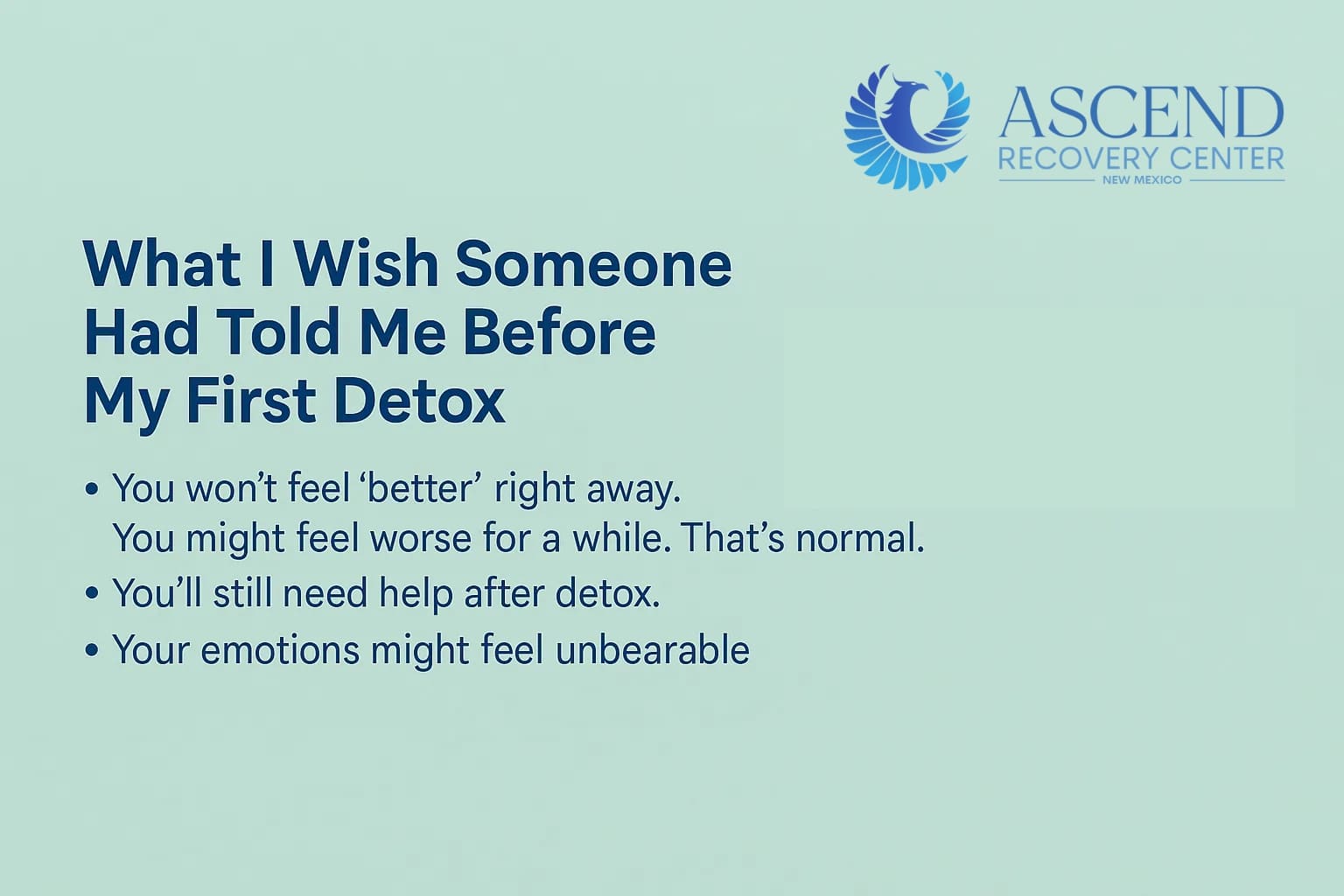
- You won’t feel “better” right away. You might feel worse for a while. That’s normal.
- Cravings aren’t a sign that it didn’t work. They’re your brain adjusting. They pass—slower than you want, but they do.
- You’ll still need help after detox. That help might look like therapy, IOP, community support, or just someone checking in on you.
- Your emotions might feel unbearable. That doesn’t mean you’re broken. It means you’re waking up.
If someone had said even one of those things to me, I might’ve tried again sooner.
The Moment I Stopped Giving Up on Myself
There was a night about three weeks after my first detox when I was ready to use again. Nothing dramatic had happened. I just felt hollow. That quiet kind of hopeless that creeps in when no one’s watching.
I didn’t reach out. I didn’t go to a meeting. I didn’t relapse either.
Instead, I stared at a sink full of dishes and whispered, “I don’t want to keep living like this.”
It wasn’t a recovery moment. It was just a human one. But it was honest. And for the first time, I realized maybe I didn’t need another detox—I needed help staying out of that cycle.
That’s when I called Ascend and asked, “What else is there besides detox?”
Detox Is the Start. The Rest Is What Saves You.
At Ascend, I learned that detox is just one piece of the puzzle. The facility helped me stabilize physically, yes—but more importantly, they helped me connect to the next steps.
For me, that looked like a partial hospitalization program followed by intensive outpatient therapy. For someone else, it might be different. But here’s the truth:
You don’t need the perfect plan. You just need to keep showing up.
If you’re near Las Cruces or Rio Rancho, Ascend has locations that can connect you to care that actually fits. Not some one-size-fits-all protocol—but something that matches what you need.
You’re Allowed to Feel Skeptical
If you’re thinking, “But I already tried this,” I get it.
There’s no pep talk that undoes the disappointment of feeling like treatment didn’t help. But what I’ve learned is this: it’s okay to feel skeptical. It’s okay to protect yourself with that edge of doubt.
Just don’t let that skepticism become isolation. Don’t let it talk you out of trying differently.
Sometimes the difference isn’t the detox—it’s the people guiding you afterward.
FAQs: Drug Detox Program Real Talk
What is a drug detox program supposed to do?
A drug detox program is designed to help your body safely withdraw from substances. It addresses physical dependence—not emotional healing or relapse prevention. At Ascend, medical detox includes supervision, safety monitoring, and comfort care, but it’s meant as a foundation for continued treatment.
Why did I still feel cravings after detox?
Cravings are a natural part of withdrawal and early recovery. Detox doesn’t erase cravings—it removes the substance from your body. The psychological part takes longer. That’s where continued care (like IOP or therapy) comes in.
What if I’ve already done detox and relapsed?
You’re not alone. Relapse doesn’t mean detox didn’t work. It means you may not have had the right support afterward. Detox clears the body; staying sober usually requires emotional and behavioral support. Ascend can help you re-engage without judgment.
Can I do detox more than once?
Yes, and many people do. There’s no shame in that. Each attempt is a chance to learn, reset, and connect to what you really need next. What matters most is how you’re supported after detox—not how many times you’ve been.
How do I know if I need detox again—or something else?
If you’re using heavily, experiencing withdrawal symptoms, or unable to stop safely on your own, detox may be necessary. If you’re already physically stable but struggling emotionally or behaviorally, a different level of care—like outpatient therapy or peer support—might be more appropriate. Ascend can help assess what makes sense for you.
Recovery Isn’t Linear. Detox Doesn’t Need to Be Either.
One of the biggest lies I believed was that recovery should be a straight line. That if I had to do detox more than once, it meant I was failing.
But real recovery isn’t neat. It’s messy. It doubles back on itself. And sometimes, it requires starting over with more honesty than last time.
If detox felt like a dead end for you, maybe you weren’t done. Or maybe you were never really supported in what came next.
Either way—you’re allowed to begin again.
You Don’t Have to Pretend You’re Fine
If you’re still hurting, still uncertain, still holding onto skepticism, you’re not the exception. You’re the norm.
Don’t wait until it’s “bad enough” to reach out. Don’t wait until you believe you can succeed. Just get honest about where you’re at, and ask what’s possible from here.
Even if you don’t trust treatment, trust your exhaustion. Let it guide you toward something better.
Let’s Talk About What Comes Next
Call (888) 792-5442 or visit Ascend’s drug detox program in Albuquerque, New Mexico to find out how we support clients before, during, and after detox. You’re not starting over. You’re starting differently—and that matters.
