


You’ve done it all. Therapy. Outpatient programs. Maybe even a previous rehab stay. And still… your son or daughter is using again. You’re not imagining things: this pain is real, and it’s exhausting. If you’re starting to wonder whether anything will actually work, you’re not alone—and you’re not out of options. A residential treatment program offers something different. Not just more of the same, but a shift in environment, intensity, and healing potential.
Let’s talk about what makes it different—and why that difference matters.
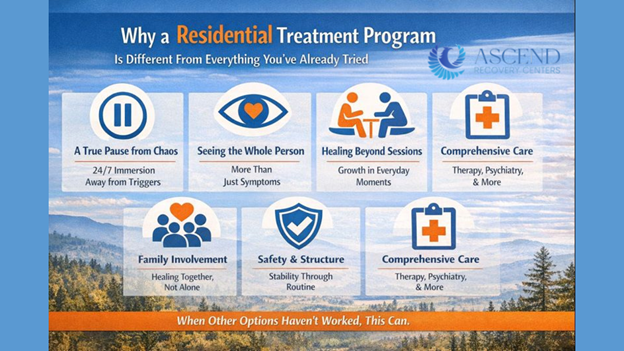
It’s Not Just a Program. It’s a Pause Button on Chaos.
When your child lives at home—or even nearby—everything around them pulls at their old patterns: the people, the places, the pressures. A residential setting cuts through that noise. It offers full immersion in recovery, not just a few hours a week.
It’s a place where everything—from morning routines to evening reflections—is designed to support healing. Not fix them. Not control them. Just give them a chance to finally breathe and begin again, without being pulled back under.
Staff See the Whole Person, Not Just the Crisis
In residential care, we’re not just treating a diagnosis—we’re getting to know the human being behind the behaviors. With 24/7 observation and support, clinicians don’t rely on secondhand reports or 45-minute check-ins.
We notice the anxious silence at breakfast. The late-night pacing. The small signs that something’s working—or not. That depth of understanding can change the entire course of treatment.
Healing Happens Between the Appointments
Outpatient treatment often focuses on what happens in the room. But in residential care, healing happens in the in-between. The group walks. The tough moments after therapy. The laughter at dinner. The hard conversations at curfew.
These unscripted moments build trust. They’re where people start to believe that they belong—and that change is possible.
Family Work Isn’t Optional. It’s Central.
You’re not a bystander in your child’s recovery. In a strong residential treatment program, family involvement isn’t a checkbox—it’s woven in.
At Ascend New Mexico, that means weekly family sessions, communication coaching, and space to process the grief you’re carrying, too. Because this isn’t just their healing. It’s yours, too.
Structure Creates Safety (Even When They Push Back)
A predictable schedule. Clear boundaries. A no-phone policy. For many young adults, these feel restrictive at first. But structure isn’t about punishment—it’s about safety.
It lets the nervous system exhale. It teaches emotional regulation. And yes, sometimes it causes a fight or two—but those conflicts are therapeutic moments, not dealbreakers.
It’s More Intensive—But That’s the Point
If your child is 20 and still struggling, they may need more than talk therapy and medication checks. A residential treatment program offers a layered, intensive model: therapy, psychiatry, skills groups, experiential therapies, and medical care all in one place.
It’s not “extra.” It’s appropriate. Especially when nothing else has reached them.
When “Nothing Worked,” This Might Be What’s Been Missing
It’s not your fault. If that sentence is hard to hear, read it again.
Your love didn’t fail. But your child may need a level of care and safety that no parent—no matter how dedicated—can create alone. That’s what residential care offers: not a promise, but a possibility. A chance to change the pattern, not just fight it.
📍If you’re looking for hope in the middle of exhaustion, our residential treatment program services in New Mexico are here to offer both clarity and care.
📞 Call (888) 792-5442 or visit Ascend New Mexico’s residential program to learn more.
