


You wouldn’t believe how many people walk into our Residential Treatment program in Albuquerque still wearing the mask.
Not a literal one—but the practiced smile, the tailored outfit, the confident voice. These are the clients who look like everything is fine. And that’s exactly what makes their addiction so hard to spot—even to themselves.
Because addiction doesn’t always scream. Sometimes it whispers through routines, hides behind success, and thrives in silence.
The Quiet Kind of Struggle
We see it all the time—clients who say, “I’m not like the others. I haven’t lost everything.”
What they mean is: they haven’t been arrested. They haven’t lost their job. They’re still paying the mortgage. They’re still parenting, showing up, meeting deadlines.
But what they don’t always realize is that they’ve been losing themselves for a long time.
This is the exhaustion we hear from people across Near Albuquerque, NM—especially high-functioning professionals and parents in Santa Fe and Rio Rancho—who quietly battle their substance use behind closed doors.
It Doesn’t Have to Look Like Rock Bottom
There’s this myth that treatment is only for people who’ve hit “rock bottom.” But what if you’re not falling apart—just falling asleep inside your own life?
What if it’s:
- A glass of wine at night that turned into a bottle… and now two.
- A prescription that helped you focus until you couldn’t stop needing it.
- Juggling it all—career, family, image—while feeling like a fraud behind your eyes.
You’re not falling. You’re functioning. And that’s exactly what keeps so many people stuck.
What High-Functioning Addiction Feels Like
Here’s what clients often tell us once the dust settles in residential care:
“No one knew. I didn’t even really let myself know.”
“I kept saying I was fine because I was getting things done. But inside, I was drowning.”
“I thought if I could just rest, I’d be okay. But I never let myself stop long enough to actually heal.”
When you’re high-functioning, you become an expert at hiding pain—even from yourself. And when the world keeps rewarding your productivity, it’s easy to confuse performance with wellness.
What Changes Inside Residential Treatment
When high-functioning adults enter residential care, it’s often the first time in years they’ve stopped.
Stopped pretending.
Stopped explaining.
Stopped running.
That’s where the healing begins.
At Ascend, we help clients reclaim what addiction stole—clarity, energy, presence, self-trust. Our residential program provides:
- A structured, quiet space to rest your nervous system
- Supportive therapy without shame or judgment
- Community with people who also “looked fine” on the outside
- Time away from constant demands to reconnect with what you want—not just what’s expected of you
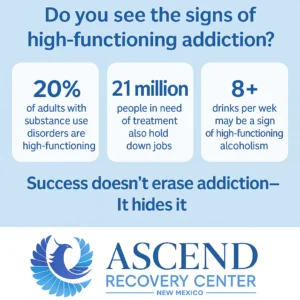
You Don’t Need a Breakdown to Ask for a Break
If you’re reading this and thinking, “It’s not that bad,” we get it.
But maybe that’s the problem. Maybe things are just bad enough to keep going, but never good enough to feel fully alive.
Here’s what we ask our clients to consider:
What if recovery isn’t about stopping something destructive—
but starting something honest?
You don’t have to crash to deserve help. Sometimes, it’s the people holding it together who need rest the most.
What We See in High-Functioning Clients Over Time
We see it every day:
The first week?
They’re anxious, unsure, still half-working from their phones.
Week two?
They start sleeping more. They start noticing how tired they really were.
Week three?
They cry—not from sadness, but relief. The mask is off. Their body is finally catching up to the truth their heart has known for a while: I can’t keep doing this alone.
By the end of their stay?
They leave lighter—not because everything is perfect, but because for the first time in a long time, they’re not pretending.
Why Albuquerque? Why Ascend?
People choose Ascend Residential Treatment program Near Albuquerque, NM for more than just our credentials.
They come because we understand the high-functioning struggle. We don’t expect collapse to validate your pain. We trust what you say. We listen for what hasn’t been said.
Whether you’re seeking help from right here in Albuquerque or looking for Residential Treatment in Las Cruces or elsewhere in the state—we’re ready when you are.
Frequently Asked Questions About Residential Treatment for High-Functioning Adults
What if I can’t take time off work?
We hear this a lot. If you’re functioning well enough to work, the idea of stepping away can feel impossible. But here’s the truth: continuing to function while slowly deteriorating isn’t sustainable. Many clients take medical leave or FMLA to attend treatment. Our team can help you explore options.
Will anyone find out I’m in treatment?
Privacy is a cornerstone of everything we do. Your stay at Ascend is confidential. We do not disclose information to employers, family members, or others without your written consent.
I haven’t hit “rock bottom”—do I really need this?
Needing help isn’t about how bad things look. It’s about how you feel. If you’re constantly tired, hiding your use, or feeling emotionally disconnected, you may benefit from treatment—no dramatic crisis required.
Can I keep my phone and laptop?
We recognize that high-functioning clients often have ongoing responsibilities. While we encourage unplugging for healing, accommodations may be made on a case-by-case basis for limited communication needs. The goal is to balance real-life responsibilities with real recovery.
How long is the program?
Most clients stay between 30–45 days. However, this is individualized. Your treatment plan is based on your goals, your needs, and how you’re progressing—not a fixed calendar.
📞 Ready to stop holding it together by yourself?
Call (888) 533-9334 or visit to learn more about our Residential Treatment program services in Albuquerque, Near Albuquerque, NM.
