


There’s fear—and then there’s this.
You’re not overreacting. You’re not being dramatic. You’re in crisis—and you know it.
When your young adult is unraveling in front of you—when nothing makes sense anymore, when love alone isn’t enough to keep them safe or anchored—this is where you end up: in the middle of the night, surrounded by browser tabs, fear running your nervous system ragged, trying to make sense of what’s happening.
If you’re here, reading this, you’ve already crossed a line most parents never thought they’d approach: considering a residential treatment program. And as scary as that may feel, it might also be the first real relief you’ve had in weeks, months—or even years.
At Ascend’s Residential Treatment Program in Albuquerque, Near Albuquerque, NM, we walk with families in exactly these moments—not after things settle down. But right here, in the storm.
You’re Not Being Paranoid. You’re Picking Up on the Truth.
Your child is changing—and not in the usual growing-up way.
You’ve seen it:
- Sudden silence or explosive anger
- Days spent sleeping or nights they don’t come home
- Substances, maybe. Or self-harm. Or paranoia. Or something else you can’t quite name
- A complete emotional shutdown, like they’re fading in front of you
You’re stuck between two impossible questions:
“What if I’m overreacting?”
“What if I’m not—and I don’t do enough in time?”
What you need is not another internet search. What you need is containment. Structure. Eyes-on care. A place that doesn’t just respond to the crisis, but understands how to stabilize it from the inside out.
That’s what residential care offers—and it’s why Ascend exists.
What a Residential Treatment Program Actually Does
Forget the fear-based images from movies or outdated institutions. This isn’t about locking your child away. It’s about bringing them back to center in a space that’s safe, clinical, and compassion-driven.
At Ascend’s residential program, your young adult will receive:
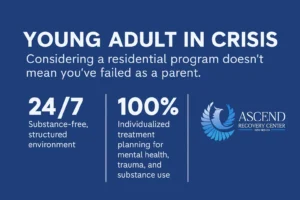
- 24/7 care in a highly structured, substance-free environment
- Individualized treatment planning tailored to their needs—mental health, substance use, trauma, or all of the above
- Licensed therapists and clinical teams who specialize in emerging adulthood and crisis stabilization
- Daily therapy, medication management (if needed), and group process
- Family involvement, education, and support—without placing everything on your shoulders
And if location matters, know this: Ascend serves families across Near Albuquerque, NM. Whether you’re in Albuquerque or looking for a residential treatment program in Las Cruces, Near Albuquerque, NM or Rio Rancho, the goal is the same: stabilize the crisis and bring hope back into the picture.
Endless Searching Is a Trauma Response
Parents in crisis get stuck in “information loops.” You scroll. You read. You save links. You jump from diagnosis to treatment centers to parenting forums to emergency room reviews. It’s frantic, even if it looks calm on the outside.
But let’s be clear: that’s not indecision. It’s trauma.
When you’re in survival mode, your brain craves control. And researching gives the illusion of it. But eventually, searching becomes its own form of paralysis.
You don’t need to know everything before making a move. You just need one clear, qualified place to start.
You Can’t Be Their Everything. And You’re Not Supposed To Be.
Right now, you might be:
- Trying to talk them down from another panic spiral
- Hiding sharp objects or car keys
- Begging them to go to therapy
- Cancelling work meetings, staying up all night, crying in your car
You are not failing. You’re in crisis—with no one holding you up.
Residential treatment exists so you can stop acting as therapist, doctor, probation officer, and crisis responder. So you can return to the role only you can fill: being their parent.
“The first night my son was at Ascend, I cried. Not from fear—but from finally being able to sleep.”
– Parent of client, 2023
But What If They Don’t Want to Go?
This is one of the most common questions we get. And it’s valid. Young adults in crisis are often confused, angry, or detached. Many don’t want treatment—until they feel safe enough to want anything at all.
Here’s what we know:
- People change more in response to safety and clarity than to pressure
- Crisis doesn’t always allow for perfect consent—but it still deserves dignity
- We are trained to help reluctant, resistant, and overwhelmed clients engage
- Treatment doesn’t require them to be “ready”—just willing to begin
In some cases, parental influence, clear boundaries, or coordinated interventions can help initiate treatment. You don’t have to carry this decision alone—and you shouldn’t.
You Are Not the Cause. But You Can Be Part of the Solution.
One of the heaviest burdens for parents in crisis is guilt.
You replay every red flag you missed. Every boundary you wish you held. Every time you believed “I’m fine” when something deep down told you otherwise.
But behavioral health crises are complex. They are influenced by brain chemistry, trauma, developmental pressures, identity struggles, family patterns, and more. You didn’t cause this. But you can help shift what happens next.
You don’t need to fix your child. You just need to get them (and yourself) into a space where the fixing doesn’t depend on you.
If you’re closer to Santa Fe, Ascend also supports families through our residential treatment program in Santa Fe, NM, offering the same level of clinical intensity and family-integrated care.
You’re Not Too Late. You’re Just On Time.
It may feel like everything’s already in motion—too fast to stop, too chaotic to contain. But we’ve seen hundreds of families in your shoes. And what we can tell you is this:
You are not too late. Not for treatment. Not for repair. Not for hope.
What feels like the collapse may actually be the opening. The first crack in the denial. The moment your family stops surviving and starts healing.
You don’t need to believe it yet. You just need to take one step in its direction.
FAQs: Residential Care for Parents in Crisis
How do I know if residential care is really necessary?
If your young adult is unsafe, unable to function, or emotionally unresponsive to outpatient care—residential treatment should be considered. Crisis doesn’t have to mean hospitalization first. Early containment can prevent deeper collapse.
What if my child refuses to go?
Many young adults resist the idea of treatment at first. Ascend offers support for family-led conversations, intervention coordination, and pre-admission coaching. Consent looks different in crisis—and we’ll help you navigate it without burning bridges.
Do I stay involved if my child is in residential care?
Yes. At Ascend Recovery Center Near Albuquerque, NM, we work closely with parents and families throughout the process. You’ll be involved in family therapy, psychoeducation, updates, and re-entry planning—without being responsible for managing the daily crisis.
Will this make things worse between us?
It might feel tense at first, especially if there’s resistance. But most families report that residential care improved relationships by reducing emotional volatility and creating healthier communication structures.
How long will they stay?
Length of stay depends on clinical needs. Most programs begin with a 30-day commitment, with options to extend. Our team will work with you to determine the best timeframe for stabilization and growth.
What makes Ascend different from other treatment programs?
Ascend was built specifically for people in active crisis—especially young adults and their families. We combine trauma-informed care with real-world planning, family integration, and staff who’ve walked this path hundreds of times before.
Call (888)533-9334 to learn more about our Residential Treatment Program services in Albuquerque, Near Albuquerque, NM.
Let today be the day you stop doing this alone. Your child is worth the care. And so are you.
